Signs of Hard Water in Phoenix Homes
Phoenix tap water picks up calcium and magnesium on its way here. It travels as Colorado River water carried by canal, and it also comes from rivers and wells across central Arizona. Heat makes the problem show up faster. When water warms in a water heater, a dishwasher, or a sun-baked supply line in an attic, the minerals drop out and harden onto whatever they touch. That is why scale in this city tends to build on the hot side first. Homes in Phoenix, Scottsdale, Tempe, Mesa, and Chandler draw from similar sources, so the symptoms look much the same across town.
Common signs that a softener would help:
- White or tan crust around faucet aerators and showerheads.
- A cloudy film on glass shower doors that returns days after cleaning.
- Spotted dishes and glassware straight out of the dishwasher.
- Soap and shampoo that need extra pumps before they lather.
- Towels and laundry that dry stiff and scratchy.
- A water heater that pops, rumbles, or takes longer to recover.
If you see two or more of these, your hardness is high enough to be worth measuring.
How a Water Softener Removes Hardness
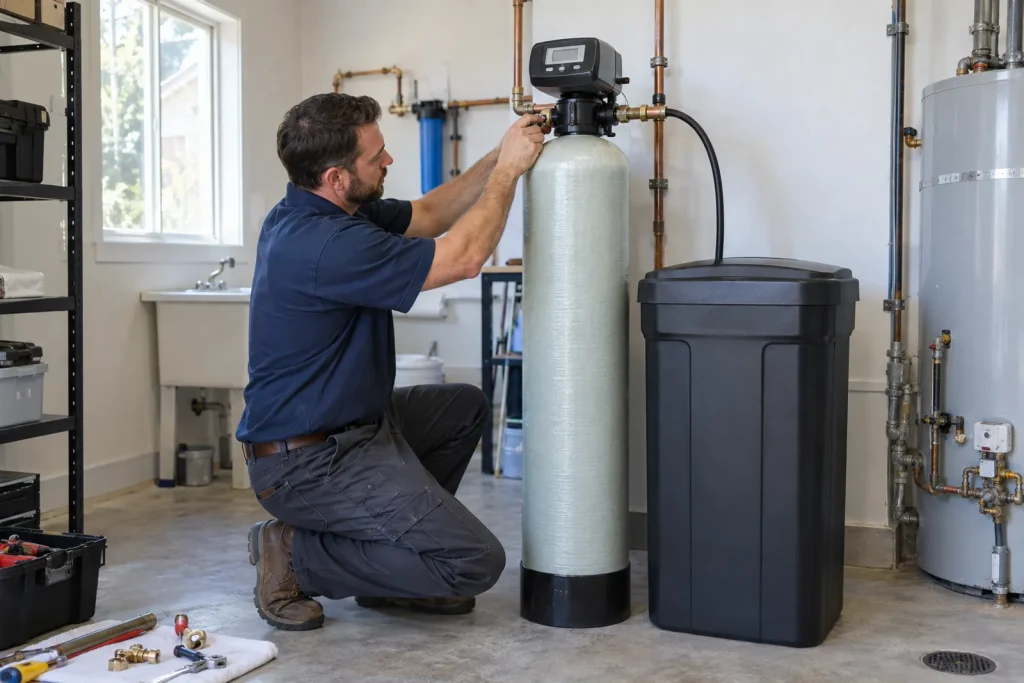
Inside the main tank sits a bed of small resin beads that carry a charge. Hard water flows through the bed, and the beads grab calcium and magnesium while releasing sodium or potassium in their place. Once the beads fill up, the control valve starts a regeneration cycle. Brine from the salt tank rinses the bed, the trapped minerals flush out through a drain line, and the resin is ready to work again.
A softener handles hardness only. Chlorine taste, odor, sediment, and dissolved contaminants call for filtration, often a carbon system for the whole house or reverse osmosis at the kitchen sink. Plenty of Phoenix homes run a softener and an RO unit together. We test your water first and tell you plainly which problem you have, so you pay only for equipment your water calls for.
Sizing and Installing a Water Softener for Your Home
Capacity depends on two numbers: how hard your water tests and how much your household uses each day. An undersized unit regenerates too often and burns through salt. An oversized one costs more up front than it needs to. We pick a size that fits the house, then set the valve to regenerate based on actual use where the model allows it.
- We test hardness at a fixture and ask about household size and daily use.
- We shut off the main supply and tie the softener in at the main line, often at the softener loop many newer homes have in the garage.
- We add a bypass valve so you can take the unit offline without cutting water to the house.
- We run the drain line to an approved drain with a proper air gap.
- We load salt, program the regeneration schedule, and test the softened water before we leave.
- We show you how to check salt, use the bypass, and spot a salt bridge.
Garage installs are common here, and summer garages get very hot. Monsoon humidity can make salt clump into a hard crust, called a bridge, that sits above the water and stops brine from forming. Press on the salt with a broom handle when you check it each month.
What Affects the Cost of a Water Softener
Estimates are free, and we give you a flat-rate quote before any work starts. The price depends on a handful of factors.
| Factor | Why it changes the price |
|---|---|
| Unit capacity and valve type | Larger resin tanks and metered valves cost more but use less salt and water over time. |
| Installation location | An existing loop near the main line is the simplest tie-in. |
| New plumbing | Homes without a loop need pipe run to a suitable spot. |
| Drain access | A long drain run or no nearby drain adds labor and material. |
| Removing an old unit | Disconnecting and hauling off a failed softener adds time. |
Phoenix water is hard, and it wears on every part of your plumbing. If your main line is leaking or corroded, see Water Line Repair & Replacement. To cut down on scale and improve taste, read about Water Filtration & Reverse Osmosis. For a tank that runs cold or leaks, visit Water Heater Repair & Replacement. To keep sediment from building up, see Water Heater Maintenance & Flushing.
What's included with our water softeners
- Water tested before any equipment is recommended
- Softener sized to your household's actual use
- Less scale on faucets, glass, and heaters
- Flat-rate quote before work starts
- Same-week scheduling for installs
- Licensed and insured local plumbers
How water softeners works with Desert Peak Plumbing
Test and quote
We check your water hardness at a fixture, ask about your household size and daily use, and give you a free estimate with a flat-rate price before any work begins.
Install at the main line
We shut off the supply, connect the softener at your main line or existing garage loop, fit a bypass valve, and route the drain line with a proper air gap.
Program, test, explain
We fill the brine tank, set the regeneration schedule, confirm the water comes out soft, and walk you through checking salt, using the bypass, and breaking up a salt bridge.
Water Softeners across Phoenix, AZ
Desert Peak Plumbing provides water softeners throughout Phoenix, AZ. See every area we cover on our service areas page.
Get Water Softeners in Phoenix, AZ